
The Great Wildebeest Migration
Explore the trip details and plan your journey with our local team.
Enquire About This TripTour Overview
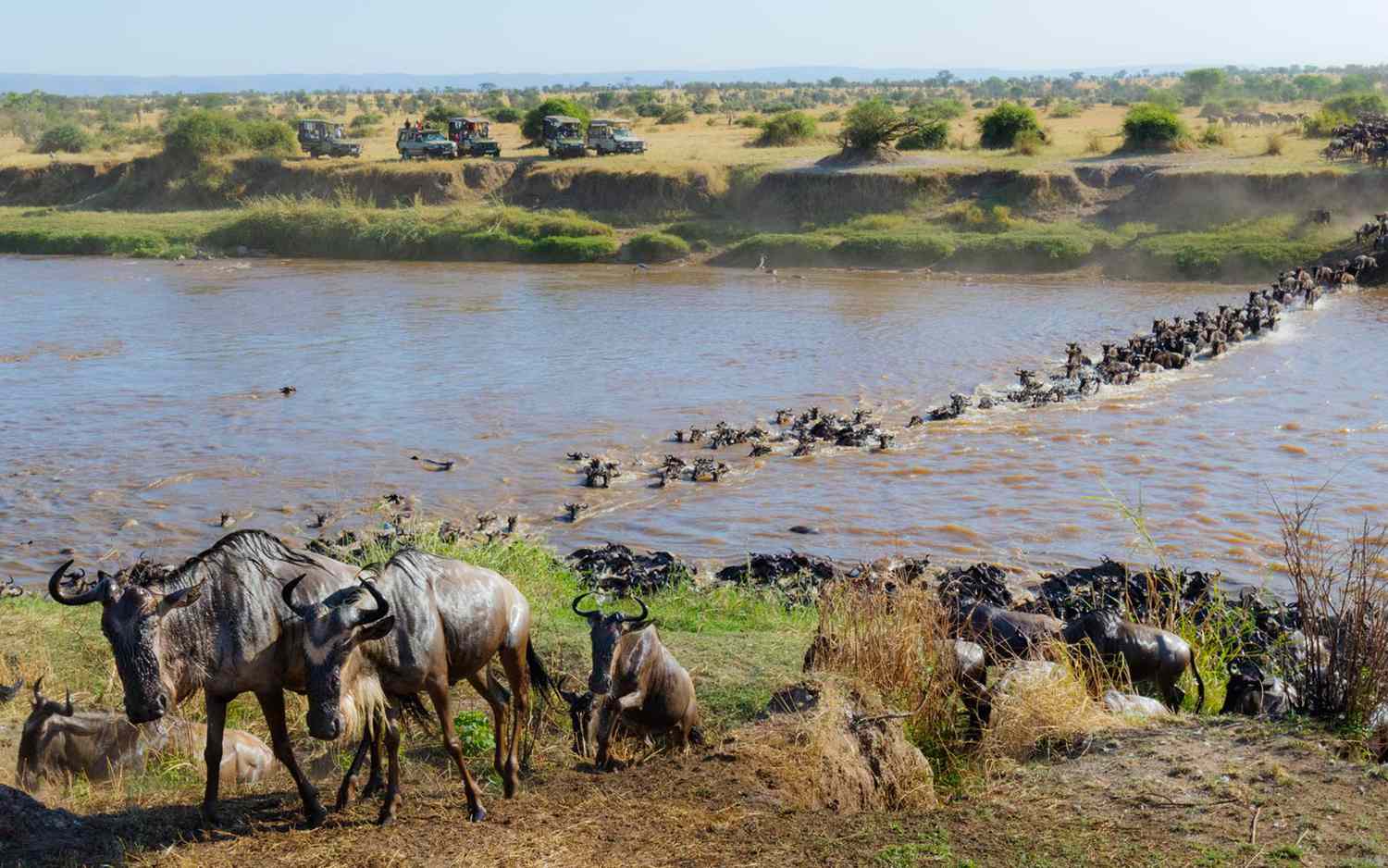
Follow one of nature’s most remarkable wildlife journeys across the Serengeti plains, from the southern calving grounds to the dramatic northern river crossings.
The Serengeti's greatest wildlife spectacle
Every year, vast herds of wildebeest, accompanied by zebras and gazelles, travel through the Serengeti–Mara ecosystem in search of fresh grazing and water. Their movements create unforgettable scenes: newborn calves on open grasslands, predators following the herds and, in some seasons, dramatic river crossings.
The migration is a year-round cycle rather than a single event. The best place to visit depends on when you travel and what you most hope to see.

Choose your migration experience
Different months reveal different chapters of the migration. These seasonal patterns are typical, not fixed schedules.
Southern Plains & Calving
Explore Ndutu and the southern Serengeti, where herds often gather on nutrient-rich grasslands and many calves are born during the peak calving period.
Moving North & Western Corridor
Follow the herds as they spread through the central Serengeti and Western Corridor. The Grumeti region may feature in their movements as the season progresses.
Northern Serengeti & Mara River
Visit Kogatende and the northern Serengeti for the possibility of river crossings and spectacular concentrations of wildlife. Sightings depend on conditions.
The migration, month by month
Use this overview to plan your route with flexibility for changing wildlife movements.
December – March
Herds commonly concentrate around Ndutu and the southern plains. Calving is especially associated with January and February, bringing excellent opportunities to observe predators.
April – May
As the rains influence grazing, herds begin spreading north and west through the Serengeti. Green landscapes and changing concentrations make routes more flexible.
June – July
Herds often move through the Western Corridor and central or northern Serengeti. Some may encounter the Grumeti River before continuing north.
August – October
The northern Serengeti and Mara River become key areas. Herds may cross repeatedly, move in different directions, or remain on one bank for days.
November
Short rains often encourage the herds to move south toward the Serengeti's southern grazing grounds, although timing varies from year to year.
Throughout the Year
Resident wildlife remains in the Serengeti beyond the migration itself. A well-planned safari can combine migration areas with rewarding general game viewing.

Where do the herds travel?
The migration circulates across Tanzania’s Serengeti and, seasonally, Kenya’s Maasai Mara. The Mara River winds through the northern Serengeti and Kenya, so not every crossing is an international border crossing.
In Tanzania, the Kogatende and Lamai areas are important northern migration locations. During the calving season, the Ndutu area and southern plains are usually a stronger focus.
The moments that make it unforgettable
From river crossings to endless herds on the plains, every safari reveals a different side of the ecosystem.

Choosing the right safari accommodation
Mobile tented camps may relocate seasonally to remain near key migration areas, while permanent lodges offer a comfortable base for game drives. The right choice depends on your travel dates, budget, preferred comfort level and the latest herd movements.
Southern Serengeti & Ndutu: Ideal areas to consider during the calving season.
Central & Western Serengeti: Useful bases during transitional months.
Northern Serengeti: A strong choice when hoping to witness Mara River crossings.
Great Migration safari FAQs
What is the best time to see the Great Migration in Tanzania?
It depends on the experience you want. The southern Serengeti and Ndutu are often best for calving from approximately December to March, while the northern Serengeti is a popular choice for possible Mara River crossings from July to October.
Are Mara River crossings guaranteed?
No. Crossings are unpredictable and depend on rainfall, grazing conditions and animal behavior. Spending more time in the northern Serengeti can improve your opportunities, but sightings cannot be promised.
Can I see the migration without staying in a mobile camp?
Yes. Permanent lodges and tented camps can also provide good access to migration areas when their locations suit the season.
Does the migration happen only in Kenya?
No. The migration is a circular movement across the Serengeti–Mara ecosystem, with major stages taking place in Tanzania throughout the year.
Experience the Great Migration with Jarga Tours
Tell us when you plan to travel and what you would love to see. We’ll help you choose a suitable Serengeti route and accommodation style.
Included & Excluded
What's Included
Our team will confirm the services included in your personal quotation.
What's Excluded
Our team will confirm any costs excluded from your personal quotation.
Accommodation, meal arrangements and any seasonal itinerary adjustments are confirmed in your individual quotation.
Make Your Tanzania Trip Personal
Need different dates, accommodation or extra nights? Ask our local team for a tailored itinerary.
Request a Custom QuoteDiscover Tanzania Safaris
with Local Experts
Explore Tanzania’s spectacular wildlife destinations with knowledgeable local guides and thoughtfully planned safari itineraries.
Discover Tanzania SafarisPACKAGES